Distribution of Powers in Libya's Future Local Governance System
Abstract
This paper analyzes how legislative, executive, and judicial powers could be distributed between national and subnational authorities in a future decentralized Libyan state. Based on stakeholder consultations and international comparisons, it maps competing visions of decentralization, identifies sectoral preferences for shared or local decision-making, and discusses institutional, legal, and political pathways for transferring powers while preserving state unity and effective coordination.
1. Introduction
The Libyan Roadmap for the “Preparatory Phase for a Comprehensive Solution,” which emerged from the Libyan Political Dialogue Forum (LPDF), refers to strengthening local governance in Libya as one of the main mechanisms for resolving the current conflict and addressing its root causes, through a fair distribution of powers and resources across all regions. Many believe that the centralization of power and wealth over decades has contributed to the production of a political system based on authoritarianism and a single-minded, rentier economic system that deepens the struggle for power and leads to unbalanced and equitable development. In this context, local governance is presented as a means to resolve the conflict over central authority by distributing decision-making power, and as a tool for rebuilding the state on the basis of participation, justice, and equality between regions.
Local governance is likely to feature in the latest initiative by the UN to foster a structured dialogue among Libya’s key stakeholders, due to begin in November 2025. This paper addresses the issue of the distribution of powers and responsibilities between levels of government in a future local governance system in Libya based on the decentralization of powers and resources within a unified governance system. These issues are likely to arise in several of the UN structured dialogue’s five priority areas: governance, economy, security, national reconciliation, and human rights.
The paper is based on interviews with various stakeholders in Libya, including local governance experts, academics, and representatives of political and social groups, conducted between July and September 2023, and workshops in February and December 2024. It also includes a review of available studies on the history and reality of local governance in Libya. This paper is the second in a series on the future of local governance in Libya, with each paper focusing on a different aspect of local governance.
The aim of the paper is not to provide answers or support specific models for the distribution of powers, but rather to highlight the fundamental questions or issues that Libyan stakeholders should address when discussing a new local governance system, and how to define these details from the outset to avoid confusion, overlap of tasks, and further conflict later on. By clarifying concepts, monitoring positions, and drawing on the experiences of other countries, we aim to present ideas and create a space for dialogue that enables stakeholders interested in the issue of local governance in Libya to study and evaluate various options and their potential outcomes, with the goal of achieving a local governance system that meets the needs and aspirations of the Libyan people.
2. Defining decentralization
As set out in the first paper of this series, we define decentralization as a system or process for distributing or assigning powers to subnational authorities that: are autonomous or semi-autonomous, meaning:
- they have legal personality
- they enjoy a significant degree of financial and administrative autonomy (enjoy their own financial resources)
- enjoy political decision-making power to issue their own decisions and use their resources without needing prior approval of central authorities
- not subject to the direct control of central government (subject only to a posteriori, not a priori, oversight)
- representative of the residents of the area (not of the central state)
Most countries in the world have engaged in some form of decentralization in the management of public governance. Decentralization is based on the idea of proximity and the assumption that bringing decisions closer to the local level is expected to lead to better service delivery, faster interventions, better resource mobilization, increased accountability, and higher citizen participation, among other things.
The term decentralization is used to describe different systems that can be either unitary or federal. It should be noted here that there is no absolute division between federal and unitary states when it comes to the distribution of powers. States have developed different distributions of powers based on considerations such as historical development, social composition, institutional capacity, and efficiency.
Similarly, unitary states can be centralized or decentralized. There are centralized federal states just as there are decentralized federal states. This highlights the importance of focusing not on the names or labels used to describe a system, but on the actual depth of decentralization – the distribution of powers and resources between the different levels.
Unitary systems can vary as widely in the degree of centralization or decentralization of powers as federal systems. In fact, some unitary states have similar levels of decentralization as federal states. For example, some unitary states, such as Denmark, Finland, Italy, and Sweden, have as high levels of decentralization of powers at the local level as Germany, a federal state. The figure below illustrates the varying degrees of decentralization in the distribution of powers in federal and unitary systems in Europe, with some unitary systems having higher degrees of decentralization than federal systems. For example, Finland and Italy, which have unitary systems, have higher levels of decentralization at the regional and municipal levels than Austria, a federal system.
Figure 1 – Average Score for Local and Regional Decenralisation Based on 12 Indicators
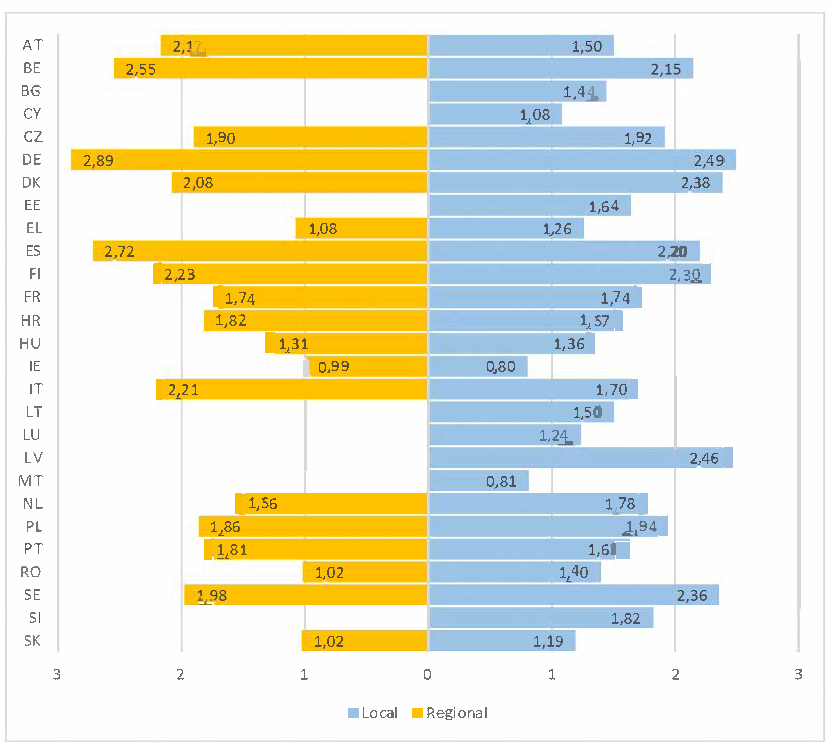 Source: Developing a Decentralisation Index for the Committee of the Regions Division of Powers Portal, European Committee of the Regions, European Union, 2021.
3. Distribution of powers in the current system of government in Libya
The first paper in this series examines the historical evolution of the local government system in Libya, along with an analysis of Law 59 of 2012 on the Local Administration System, the primary legal framework for regulating local government in Libya today. The law assigns various powers to governorates, including overseeing and monitoring the implementation of local development plans; studying and preparing plans and programs for literacy and family planning within the governorate; providing the necessary requirements and monitoring their implementation; supervising cultural activities, celebrations, and festivals; establishing and managing public health facilities; establishing universities, colleges, and higher institutes within the governorate; and providing legal and administrative facilities for private sector and investment projects. The law grants several additional powers to the governor, who is appointed and dismissed by the central authority. As for municipalities, Law 59 grants them several powers in the areas of waste collection, cleaning, managing parks and gardens, regulating markets and public places, and street maintenance.
Thus, Law 59 grants limited powers to local authorities, subjecting the exercise of many of these powers to the oversight or approval of ministries. In addition, the powers stipulated in the law have not yet been fully implemented due to several factors, including the absence of governorates, which have not yet been formed due to several obstacles. Furthermore, many of the powers granted to local authorities under Law 59 conflict with applicable laws in several areas, such as investment, health, and state property. Thus, despite the establishment of the “Higher Council for the Transfer of Powers” and the signing of some agreements between the Ministry of Local Government and other ministries (education, health, planning, etc.), progress in the transfer of powers has remained limited to date.
4. Distribution of powers under a future agreement
Decentralization refers to the transfer of powers from the central government to lower levels of government. It is worth noting that the transfer of powers here is not limited to the transfer of executive responsibility, but also includes decision-making, funding, and implementation powers, to achieve a degree of local autonomy.
We can classify powers exercised by state institutions into three categories:
- Legislative powers – In the event that legislative powers are divided between levels of government, the distribution must be set out in the constitution.
- Judicial powers – In some systems, particularly federal systems, subnational authorities (states/provinces) have their own court system that they oversee, which is responsible for resolving disputes in accordance with subnational law, and interpreting subnational law. These courts are established, managed, and funded by local authorities (state/region/province). In the event that judicial powers are divided between levels of government, the distribution must be set out in the constitution.
- Executive powers – In most countries (whether unitary or federal systems), executive powers are distributed between different levels of government. They are usually distributed according to several principles:
- Proximity or subsidiarity: According to the principle of subsidiarity, executive powers should be assigned to the lowest level of government closest to the citizens, as long as they have the ability to carry them out.[1] American author, Reed Buckley, writes: “No high-level government body should attempt to accomplish what a lower-level body can accomplish.” This principle is used in various jurisdictions, including the French law of 1973 relating to the distribution of competencies between municipalities, provinces and regions, the European Charter of Local Self-Government of 1996, the Tunisian Constitution of 2014, and in the Moroccan context by the Advanced Regionalization Advisory Committee on the Distribution of Competencies
- Efficiency: Transferring responsibility for public service delivery to the local level may result in increased costs, especially if economies of scale are important in the production and provision of certain services (for example, printing textbooks may be cheaper at the national level because the cost per copy is lower the higher the total number of copies). Therefore, transferring responsibility for the provision of certain services to the regional or municipal level may result in decreased efficiency. The European Charter of Local Self-Government stipulates the basic principle that “Public responsibilities shall generally be exercised, in preference, by those authorities which are closest to the citizen. Allocation of responsibility to another authority should weigh up the extent and nature of the task and requirements of efficiency and economy.”
- Shared responsibilities: powers are shared or distributed between levels of government in such a way that each is subject to mutual controls and oversight and they are forced to cooperate in exercising power. Since most responsibilities are shared, it is necessary to establish mechanisms for coordination, cooperation, and regular communication between different levels. Coordination tools include dialogue or policy fora, finance councils, standing committees, cross-government consultation councils, and contractual arrangements.
- Clarity: How responsibilities are distributed should be clear and understandable to all actors, for the different functions in each policy area – policy development, financing, implementation, monitoring and evaluation, etc.
- Monitoring and oversight: There must be oversight at the national level of how public services are delivered, to ensure some level of equality. Minimum service standards are usually set to ensure a degree of equality between citizens in all regions. For example, in Indonesia, after the beginning of the decentralization process in 1999, minimum standards were set in 2005 as a response to citizens’ dissatisfaction with the quality of basic services in various regions.[2]
- Equality: Decentralization should not exacerbate developmental disparities between regions. To avoid this risk, some countries who adopt decentralization establish standardized indicators or minimum service standards (MSS) that local authorities must adhere to when exercising their mandate to provide services (such as health, education, etc.), ensuring a degree of equality among citizens in all regions. For example, in Indonesia, after the decentralization process began in 1999, minimum standards were established in 2005 in response to citizen dissatisfaction with the quality of basic services in various regions.
- Capacity: One of the main problems during the distribution of powers is lack of capacity at subnational level. Local authorities may lack the ability to develop strategies and translate them into concrete measures, especially if the previous central system was based on the concentration of human and financial resources in the capital and some large cities. Local capacity may be a factor to consider when determining which powers should be delegated to the local level and the speed of transfer of those powers. Nevertheless, the inability of the local level should not be used as an excuse to maintain excessive centralization of powers. Therefore, during the reform process of the local governance system, policies and programs should be developed aimed at strengthening the capabilities of the local level. For example, during reforms in Indonesia, two million employees were transferred from the center to provinces and municipalities, while in India, municipal councils were established in 1993 without transferring employees, which led to a severe shortage of human resources.[3]
5. Views on the distribution of powers in Libya
Based on the interviews and workshop discussions carried out, a range of views among Libyan stakeholders emerged regarding the distribution of powers, which are summarized below.
5.1. Legislative powers
Some Libyan social and political group representatives support the idea of decentralizing legislative powers to regional level. They propose establishing elected executive and legislative institutions in each province/region, alongside an elected legislative council at the federal level containing regional representatives based on the population of each province/region (some also suggest taking the size of each province/region into account). Some propose that provincial/regional parliaments elect their own provincial/regional government, appoint provincial/regional prime ministers, approve the provincial/regional government’s program, monitor and hold the provincial/regional government accountable, and be granted the power to withdraw confidence from the provincial/regional government. Others reject this idea and insist that all legislative powers should remain at the national level. They argue that having multiple regional parliaments would be excessively complex, unwieldy and costly.
5.2. Judicial powers
Based on the interviews and discussions conducted as part of this research, no participating groups strongly advocated for the idea of decentralizing judicial powers to the local level.
5.3. Executive powers
There was general agreement among those participating in the interviews and workshops that executive powers need to be decentralized. However, there are differing views on which executive powers should be decentralized, as summarized below
- Some groups (mainly pro-federalism parties) propose granting broad powers to provincial/regional governments relating to all matters that fall outside “sovereign” domains (namely defense, foreign affairs, nationality, and macroeconomic policy). These parties distinguish between “sovereign” functions (which they argue should remain the prerogative of national authorities) and “service” functions (which should be transferred to subnational level). They propose that most responsibility for public services, such as health and education, should be transferred to subnational level. Some propose that the constitution stipulate that subnational authorities enjoy powers over all domains not explicitly reserved for national authorities.
- Some groups support transferring a large proportion of the central government’s powers related to services to governorates and municipalities. They agree with pro-federalism parties on transferring executive powers relating to a broad set of policy domains such as social affairs, health, education, etc. However, they do not support the idea of a constitutional provision granting subnational authorities executive powers over all “non-sovereign” domains. Some propose that such powers be transferred automatically once the constitution is adopted, while others propose that they be transferred gradually.
- Some groups propose propose maintaining a centralized framework, and limiting the powers of governorates to matters related to coordination between municipalities, the management of joint projects, or resources shared between municipalities.
In an elite survey conducted with 54 Libyan stakeholders in 2024 representing a range of political parties, civil society organizations, professional unions, and the private sector, as well as local community leaders, a number of preferences concerning the distribution of power in various sectors emerged:
- Security: a preference for central or shared control across most areas including border control, defence of strategic infrastructure and arms control
- Economic development:
- Transportation and Mobility: a preference for shared decision-making between national and subnational levels
- Development Planning: a split between preferences for shared decision-making and subnational control
- Infrastructure Development and Maintenance: strong preference for shared decision-making
- Investment: a split between preferences for shared control and subnational control
- Property Registry (Cadastre): a clear preference for shared or central decision-making
- Social services:
- Health: a mix of preferences for shared and central decision-making
- Education and human capital development: preference for shared decision-making, with some support for subnational decision-making
- Social protection: a preference mainly for shared decision-making, with moderate support for subnational decision-making
- Justice:
- Penal Justice: Most respondents favored centralized decision-making, with moderate support for shared decision-making
- Commercial Justice and Arbitration: Responses were mixed, with a slight preference for central and shared decision-making
- Civil Justice: Preferences were relatively evenly divided, with support for both central and subnational decision-making across respondent types
- Culture and Sport:
- Cultural Heritage: support for both shared and subnational decision-making
- Sports and Cultural Activities: a similar mix of preferences for shared and subnational decision-making
While the survey is not nationally representative, it does provide insight into preferences among elites with a significant role in the Libyan political landscape and relative support for decentralization of powers across different sectors. For some sectors, such as security, defence and justice, there is a strong preference for centralized control in certain functions like border security, strategic infrastructure, and penal justice.[4] In other sectors, particularly economic development and health, there are preferences for shared decision-making between national and subnational levels. In a third set of sectors – notably education, social protection, development planning, culture and sport – there is a stronger preference for a greater degree of subnational decision-making. These results also give an indication that, despite the demand for local autonomy from some actors, there will be a need for building a collaborative shared governance model that decentralizes power while developing coordination and cooperation among the different levels of government through various mechanisms and inducements (see section 7 below).
6. The process of determining and transferring powers
Whatever the political regime that Libyans will agree upon, it is necessary to think about a process for managing the transfer of powers between the levels of government in a way that involves multiple parties and strengthens the political will to move forward in implementing what is agreed upon. Below we discuss various questions relating to the process of agreeing on and implementing a decentralization of powers, and present some potential mechanisms that can be used.
6.1. Determining which powers will be transferred
6.1.1. Agreeing on Fundamental Principles
The upcoming Structured Dialogue to be organized by UNSMIL is due to cover governance as one of the five priority areas to be discussed. While the exact structure and participants of the dialogue are yet to be announced, this forum could serve as a space for discussing a set of fundamental principles related to local governance that could guide future negotiations over a political settlement in Libya. The aim would be to involve a broader set of actors (political actors, civil society, business) in discussing what future governance arrangements should look like, as a way of focusing attention on key public priorities, gauging public opinion among different regions and groups, and generating ideas and principles that can guide future peace talks.
These high-level fundamental principles could address a core set of substantive issues, such as the system of government (unitary or federal), the levels of government (national, provincial/regional, municipal), whether officials at each government would be elected or appointed (a point of contention with regards to the regional/provincial level), the distribution of legislative, executive, and judicial powers, and formulae or mechanisms for revenue sharing between the levels of government. They could, if agreement can be reached, also set out the number and boundaries of provinces or states or a mechanism for determining administrative divisions, given the sensitivity of this issue.
These fundamental principles on local governance could be set out in a document to be signed by the parties to the dialogue, as part of a set of fundamental principles for establishing peace. Even if this document is not made legally binding, having a document signed by the parties to the dialogue signals a common commitment to peace and to implementing the principles, and it can provide a focus for public pressure on the parties. For example, in South Africa, the 1991 National Peace Accord was a non-binding document signed by 27 political, trade union and government leaders, which set out codes of conduct for political groups and security forces. The document helped lay the ground for the parties to engage in formal negotiations and created national, regional and local peace committees composed of political and civil organizations and security forces, which played an important role in monitoring compliance with the accord, mediating and resolving local conflicts, and generating support for a peace process.
6.1.2. A political or peace agreement
Assuming that the UN structured dialogue can lead to a political process that results in a political settlement between the parties to the conflict, this settlement will be set out in a formal document or set of documents, in the form of a political or peace agreement. If the parties agree to introducing greater decentralization, this commitment should be set out in this agreement. The level of detail that can be set out in the agreement will depend on the agreements that can be reached between the parties. Some political or peace agreements contain little detail in this regard, simply stipulating that the state shall be federal or unitary or that the state has an obligation to adopt or promote decentralization. Others go into greater detail, setting out the levels of government, number of constituent sub-national units, the kinds of powers that will be decentralized (political, administrative and fiscal), and revenue-sharing arrangements.
Comparative experience has shown that leaving all the details of the distribution of powers to be agreed in subsequent laws may delay the process of decentralization and ultimately lead to its failure. Therefore, it is preferable that the parties to negotiations discuss detailed proposals regarding the distribution of powers. If they cannot agree on a detailed distribution of powers to be set out in the political agreement, there should at least be agreement on the process for determining the powers to be distributed, such as setting up a commission on the distribution of powers that will prepare proposals to be presented to a wider political decision-making body. For example, in the South Africa negotiations to end apartheid, the Multi-Party Negotiating Process (“MPNP”) brought together 208 members representing 26 parties (including political groups, traditional leaders and national and homeland government representatives) to decide on core constitutional principles that would guide the process of drafting a new constitution.
The MPNP set up various committees to discuss specific issues, composed of non-partisan political experts who would take all the parties’ views into account and draft reports and compromise proposals to break the deadlock. One of the committees, the Technical Committee on Constitutional Issues, was responsible for preparing proposals on the distribution of powers and responsibilities between national and subnational levels, which were then submitted to a Planning Committee (composed of ten Council members), which drafted resolutions for the Negotiating Council (composed of two delegates per party). The highest decision-making body was the 208-member MPNP plenary, but having this structure of smaller committees involving both political representatives and experts helped to resolve issues and reach compromise positions within a smaller forum.
When addressing the issue of decentralization, a future political or peace agreement should also be clear as to local governance arrangements during the transition (from the signing of the agreement to elections and/or adoption of a permanent constitution). In the Libyan case, this may mean keeping existing municipal councils in place until longer-term local governance reforms are introduced, possibly alongside starting the process of establishing provincial/regional level structures.
6.1.3. Legal and Constitutional Reform
a. Is a new constitution needed?
A key question is whether a new constitution will be drafted setting out a new decentralized governance system or whether the existing constitutional framework will be amended. In either case, will the existing local governance law (Law 59) and relevant laws be amended to expand decentralization or will a new local governance law be introduced altogether?
Libya is already operating under a transitional constitution, as the 2011 Constitutional Declaration remains in place until a permanent constitution is adopted and ratified. If a political or peace agreement is concluded, it could either replace the Constitutional Declaration during the transitional period, thus effectively introducing a new interim constitution, or it could amend certain provisions of the 2011 Constitutional Declaration or override it where the two texts conflict.
As for longer term constitutional arrangements beyond the end of a transitional period, there are various options currently under discussion in Libya.[5] These are summarized below:
- Amend the 1951 Constitution – some Libyan stakeholders advocate for a reinstatement of the 1951 Constitution (amended in 1963) and see it as “the only unifying matter” for Libya. Some members of the High Council of State (Libya) have officially expressed support for this option.[6] Supporters of this option argue that the 1951 constitution enjoys support and historical legitimacy and would allow for starting from an established text rather than from scratch.
- Return to the 2017 draft constitution – some stakeholders advocate for returning to the 2017 draft as a starting point for discussion. This is the third option set out in the UNSMIL Advisory Committee May 2025 report.[7] During the 2022/23 negotiations over a constitutional framework for elections, delegations from the House of Representatives and High Council of State used the draft constitution as a reference, and many analysts point out that political actors have opposed the draft in order to prolong the transition rather than based on outright rejection of its contents.[8] However, it should be noted that the provisions on decentralization remained very vague in the draft on key issues such as the distribution of powers between different levels of government and, thus, may not be particularly useful as a starting point for future discussions on local governance.
- Draft a new constitution – some stakeholders advocate for starting afresh and drafting a new constitutional text rather than amending an existing draft or past constitution. They argue that this would avoid the deficiencies of the existing texts and avoid perpetuating the status quo. Others argue that this would be impractical and lengthy, adding further delay to an already long transition.
It should be noted that, in all the four options set out in the UNSMIL Advisory Committee report (which involve different sequences for reforming the higher national election commission, holding presidential and legislative elections, and adopting a permanent constitution), the transitional phase ends with the adoption of a permanent constitution. However, some analysts have suggested that pushing for the adoption of a new constitution in Libya is unrealistic and would take a long time. Some suggest that making amendments to the existing interim constitution and amending existing laws on local governance (such as Law 59) are more realistic steps to reforming local governance on a permanent basis. This may, indeed, be a more realistic approach.
b. Is a new local governance law needed?
As mentioned above, it may be faster and more practical to amend Law 59 and other existing laws relating to local governance in the short-term, as a step towards longer-term local governance reform. Indeed, many provisions in law 59 that would advance decentralization have yet to be implemented. Amending Law 59 and speeding up its implementation by issuing the necessary executive decrees in the short-term may provide positive signals to supporters of more extensive decentralization that genuine moves towards greater local autonomy are being made, and that centralization of power will not continue indefinitely.
Even if the parties agree on drafting a new permanent constitution and replacing Law 59 with a new local governance law, Law 59 may still be retained as the legal framework for managing local governance in the interim period up to adoption of a new local governance law. In this case, it may either be maintained as it is during the interim period, or those pushing for more extensive decentralization may demand its immediate amendment and implementation during the interim period to provide some guarantee that decentralization will occur.
Key issues that would need to be amended in Law 59 in order to address the demands of those who support more extensive decentralization are the following:
- The election of provincial governors, rather than their appointment
- Expanding and more clearly defining the powers of elected provincial assemblies and their relationship with the governor
- Expanding and more clearly defining the powers of provinces and municipalities
- Removing provisions that allow the Ministry of Local Governance and provincial governors to intervene in municipal decisions (such as articles 4, 6 and 23)
- Removing provisions that allow provincial councils to dismiss elected mayors
- Declaring provisions of all laws and executive decrees that conflict with the law to be void [9]
Following this, it would be necessary to implement the law through executive decrees that transfer powers from national ministries to provinces and municipalities. A starting point for this could be to begin from the existing agreements reached by the Supreme Committee for the Transfer of Competencies of Local Administration (responsible for overseeing the process of transferring competencies) and relevant ministries on transferring competencies in education, planning and transport.[10] Starting with these sectors would mean that the technical details would already have been analyzed and discussed with the relevant ministries, which should facilitate the process. Starting with the transfer of powers in a few sectors, if it can be agreed among the parties, may allow for a gradual approach where capacity could be built up over time and the relevant personnel and resources transferred sector by sector. In parallel, the transitional government could be mandated to form a cross-ministerial committee on local governance with sub-committees tasked with mapping the functions within each ministry /sector and analyzing how to transfer these functions to different levels of government.
An incremental approach to transferring powers is much more realistic in Libya than a rapid transfer given that subnational capacity is underdeveloped due to a recent history of centralization. There is a serious challenge when it comes to establishing provinces and provincial-level bodies, which the GNU has not been able to do thus far due to disagreements over the boundaries.[11] It would be possible to launch a decentralization process starting with municipalities only, while working on establishing provincial structures (as Tunisia had done after its decentralization process started in 2018). This would cause some challenges but may be a more realistic option given the time and resources that will be needed to get provincial structures up and running. However, it may not be acceptable to parties that are strongly advocating for a federal or very decentralized model based on strong provincial powers, who may want decentralization of powers and resources to provinces to be implemented fairly quickly.
Figure 2. Process from Structured Dialogue to Local Government Law
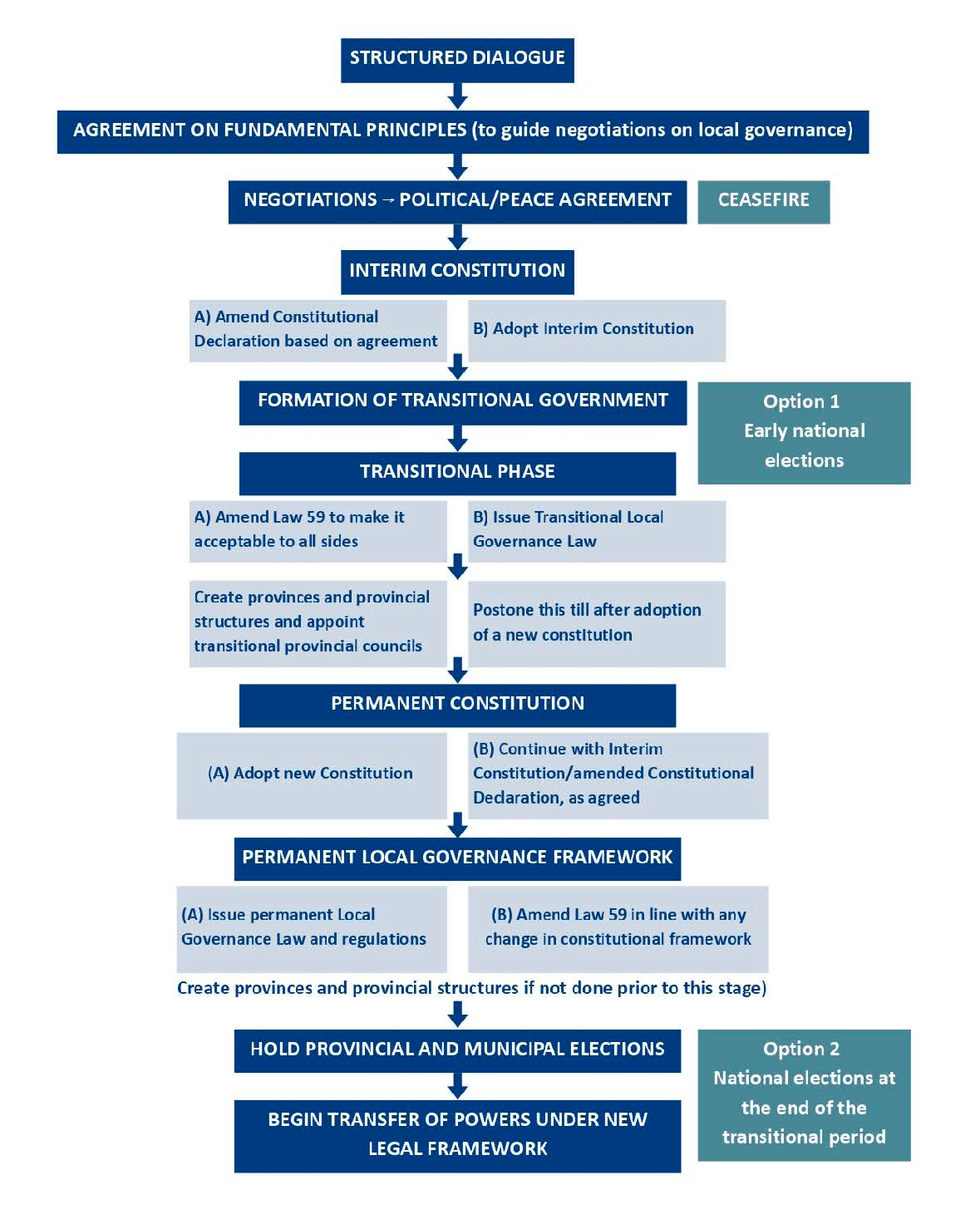
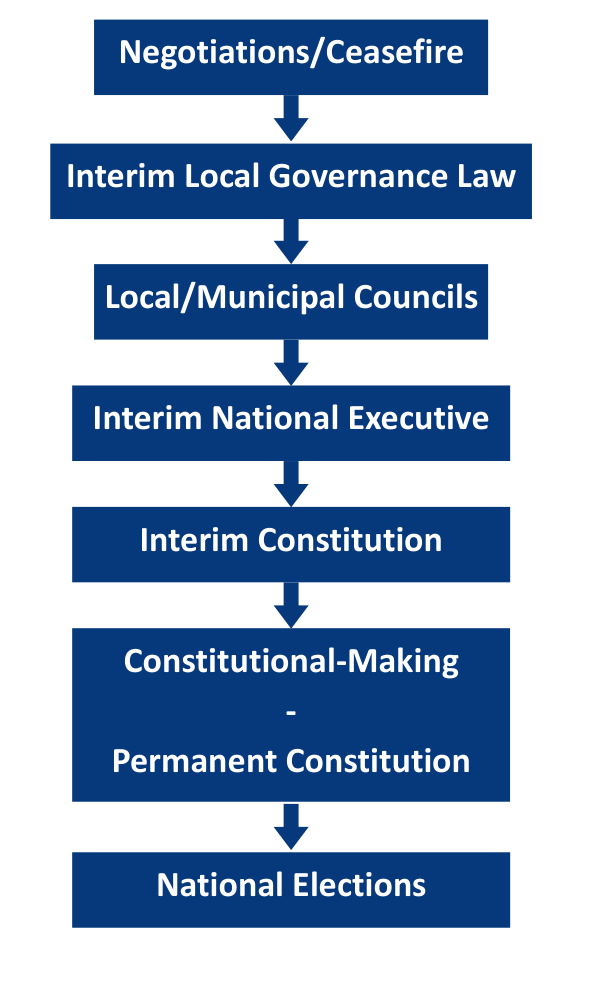
Figure 3. Alternative Pathway – Local Governance
7. The question of state unity
The presence of significant diversity in Libyan society, including tribal and regional affiliations, as well as intellectual and ethnic diversity (Arabs, Amazighs, Tebu, and Tuareg), raises the following question: How can we agree on the distribution of powers and resources while reducing conflict and promoting social peace and national unity, especially in the context of emergence from armed conflict? This section of the paper addresses some of the risks associated with the process of decentralization and the ways in which some states have sought to implement decentralization while promoting national unity.
7.1. Subnational Borders
Studies show that decentralization, especially in the form of federalism, can increase the likelihood of separatist movements emerging if local units are drawn to fit geographically concentrated ethnic groups.[14] This means decentralizing power to units below that of major identity groups is less likely to fuel regionalist separatist politics. Nigeria, for example, chose to draw decentralized units that are smaller than geographically concentrated ethnic/cultural groups, to avoid this conflict risk and has managed to keep a very religiously and ethnically diverse population together.[15] Thus, no level or unit of government is associated with a particular ethnic group or religion, and local government is identified with issues of service provision rather than identity. Similarly, in Rwanda which went through a civil war in 1990-94, local districts have been drawn to combine ethnically diverse poorer and wealthier areas to promote redistribution and social cohesion. [16]
7.2. Setting effective national monitoring mechanisms
In all systems, whether unitary or federal, oversight systems are needed to ensure accountability and limit the risks that local authorities may be “captured” or controlled by local elites for their own interests rather than in ways that respond to the needs of citizens.[17] National authorities may also have powers to intervene in specific exceptional situations such as bankruptcy.
We found a consensus among the research participants on the importance of creating effective oversight mechanisms from the central level to the local level, whether in an expanded decentralized or federal system. Some emphasized the necessity of improving oversight of municipalities in the current context and the difficulties that exist in light of the existing divisions and conflicts. Those who support federalism proposed establishing a federal oversight body, accounting office, or monitoring agency for this purpose but some stressed the necessity of the central government not intervening except in the event of a serious violation of governance.
Therefore, effective national financial and legal oversight systems must be put in place as part of a decentralization process. National monitoring could include establishing IT systems to collect data and measure indicators to monitor subnational governments’ progress on implementing projects and their spending (financial and output indicators).[18] The Tunisian Ministry of Local Affairs’ program approach of introducing municipal performance indicators may be useful, in this context. Under the program, municipalities receive part of their national funding only if they fulfil certain conditions such as respecting financial procedures and reporting deadlines, and involving citizens in decision-making.[19] This has the added benefit of setting objective, transparent indicators for national transfers, rather than the discretionary, opaque criteria that existed in the past. Indonesia, which decentralized in 2000, also took steps to introduce a new public finance system to replace its old outdated single-entry system. The new system introduced with decentralization promotes transparent management of public funds, tight expenditure and financial controls with performance indicators, computerized reporting, and a tightly scheduled auditing system.
Another form of oversight is via the judiciary. In a decentralized system in which local authorities enjoy autonomy, central authorities can generally only object to subnational decisions or actions by submitting a complaint to the administrative courts. It is the courts that have the final decision as to whether to uphold a subnational authority’s decision or action depending on whether it has behaved according to the law. This raises the need to strengthen judicial institutions, particularly the administrative court, to enable it to manage an increased number of cases. Tunisia’s decentralization reforms included the expansion of the administrative court, and the creation of 12 regional branches of the court to be able to provide decisions on disputes between different levels of government without excessive delay.[20]
Attention must be paid here to reforming the judiciary to ensure its legitimacy and impartiality to a single group or region. Therefore, the criteria for appointing members of the judiciary (such as experience and professional standards) and the appointment mechanism are crucial. The constitution may require consideration of regional diversity when appointing members of the Judicial Council and other members of the judiciary. It may establish an appointment mechanism that ensures that members of the judiciary, particularly the Supreme Judicial Council, are selected from across the country and that that region is fully represented in the selection process when selecting judges to serve in specific regions.
7.3. Holding national elections before subnational elections
Research suggests that when elections are held at subnational level in a new federal system before national elections, and where there are few nation-wide parties, this leads to greater regional divisions. In such a situation, provincial or municipal authorities may have no incentive to support the holding of national elections, since these would reduce their influence. Holding national elections first can also facilitate the preparation of the decentralization process by putting in place a national government that enjoys the legitimacy to lead reforms.
It is also preferable, if possible, to hold regional/provincial and municipal elections at the same time, to avoid creating two subnational levels of bodies that have an interest in delaying the election of the other level. Furthermore, as regional and municipal councils may need to work together, it is better to hold elections at the same time so that both are shaped by similar political dynamics. Research has also shown that holding the elections at both these levels increases voter turnout, which can strengthen the legitimacy of the elected bodies.[21]
7.4. Protections for minorities
Allowing subnational authorities to override the interests of minorities in their areas can create or deepen divisions between groups, and undermine national unity. Thus, decentralization should be designed in a way that ensures protection for minorities, whether these are ethnic, linguistic or tribal. For example, in a province that contains several tribes, each of which enjoys a majority in its area, the electoral system should be designed to ensure that all groups have adequate representation on the provincial elected body, in order to reduce tensions and resentment. Voting rules within elected councils should also be set in ways that promote inclusive decision-making rather than a “tyranny of the majority”. Minority protections could also be included in the constitution and national laws and policies to safeguard minority rights nationwide and minimize grievances.
7.5. Requiring local authorities to cooperate to deliver services and share resources
There are certain types of services that are more efficiently delivered across a larger territorial area and require coordination of resources. To draw localities together and prevent them from developing isolationist or secessionist tendencies, they could be required to share responsibility for certain services, for example water.[22] Thus, municipalities could be brought closer together by giving provinces service functions such as water provision, which require coordination across several municipalities. In addition, natural resource revenues could be shared with provinces, which would be required to share 50% of them with municipalities.
In turn, provinces could also be required to work together by also requiring neighboring provinces to share management of some strategic infrastructure. This could create greater interdependencies and cooperation horizontally and vertically between different authorities.
7.6. Strong mechanisms for intergovernmental coordination
Moving to a system of decentralization does not mean severing ties between the different levels of the state. Instead, decentralizing a highly centralized state will require creating new mechanisms for horizontal and vertical coordination and cooperation between the different governance levels and units. These are essential for ensuring the continuity of public services and administration. Decentralization reforms must not make public service delivery worse due to lack of coordination and/or increased conflict between different areas or different levels of government in one area.
For example, Tunisia, which introduced a new local governance law and held its first free and fair municipal elections in 2018, saw increased tensions between regional governors (appointed by the central government) and mayors (locally elected). Despite being civil servants who are supposed to be neutral, regional governors are often loyal to the individuals or political parties that appoint them, which sometimes brought them into conflict with local mayors from an opposing party or interest group. These tensions are natural in a transition from a one-party dictatorship to multi-party democracy. Under dictatorship, central-local relations were governed through a very hierarchical top-down system of orders, and coordination via a hegemonic ruling party. The move to multi-party pluralistic democracy with elected national and local governments with diverse compositions means there is a need for greater negotiation and bargaining between the different levels of government, which represent different territorial and political interests.
The problem is that the 2018 Local Authorities Code did not specify how exactly the governorate, regions and municipalities should work together. It left this issue to be determined later in an executive decree, but this was never issued due to delays. If the decentralization process does not create institutional mechanisms for the effective negotiation and mediation of different interests in a collaborative way, this can lead to the obstruction and even paralysis of local services.
Creating vertical and horizontal coordination mechanisms is particularly important in divided countries such as Libya where, even after the end of a war, there is a significant risk for conflict between different areas/groups. If Libyan actors want decentralization and local governance to deliver concrete benefits for citizens including improved services across Libya, it is essential to think closely about how to establish a local governance system in which there is a balance between local autonomy and intergovernmental coordination and coherence. It is important to think about decentralization – whether in a unitary or federal system – not as a central vs. subnational relationship or a process merely of dividing responsibilities, powers and resources, but of redesigning the coordination between central and subnational authorities. Such interaction will require operational mechanisms to make it work effectively, for the benefit of citizens.
These mechanisms are usually created and operated within specific policy sectors, e.g. health, education, transport. For example, Brazil, a federal country that decentralized following the Constitution of 1988, reshaped its decentralization model by creating more intergovernmental coordination mechanisms between central government, states and municipalities in order to deliver services such as health, education and social welfare. For instance, the 1988 Constitution enshrined the right to free healthcare. A system was put in place in which the federal government set national standards and monitoring systems, and the municipalities managed parts of the healthcare system. During the 1990s, the Health Ministry published the National Basic Operating Standards (NOBs) and the Basic Care Minimum Standard on health and drew up a universal health care system. Under the system, the federal state would be responsible for tertiary health care, while municipalities would deliver primary health care. The two levels shared responsibility for secondary care between them. The federal government was responsible for funding the system. To join the system, municipalities had to fulfil institutional and administrative conditions to show that they had the necessary management capacity. It took around seven years (1991-98) for all municipalities to join the universal health care system. Municipalities received automatic regular transfers to fund the healthcare based on clear and transparent criteria (such as number of inhabitants). The federal Health Ministry monitors the program through data systems.
In order to ensure intergovernmental coordination, the federal government created a whole set of federative coordination forums that involve municipal, state and federal managers in making decisions on national health policy, including the Tripartite and Bipartite Inter-manager Commissions, which are part of the National Council of Municipal Health Departments (CONASENS) and the National Council of Health Secretaries (CONASS). These are new spaces of intergovernmental negotiation that were not envisaged by the 1988 Constitution but evolved over time. to respond to the real need for coordination between. Problems remain and disputes occur between different levels of government but the system has allowed for the delivery of basic health services to citizens.
The Brazilian example of intergovernmental coordination in healthcare is important because it highlights how decentralization and local governance reforms need to consider how to give local authorities autonomy while maintaining close interaction and constant coordination between the different levels of government to achieve development and improve services. Decentralization must not be seen as the creation of autonomous islands of authority within a state. This will not work, neither for the subnational units nor for citizens. Furthermore, decentralization does not mean weakening the central state but actually requires strengthening the central state’s capacity to coordinate, direct and oversee policies and programs, while allowing subnational authorities a greater role in decision-making and implementation.
8. Conclusion
The debate over the distribution of powers in Libya is ultimately a debate about how to rebuild a unified state after years of political division, institutional collapse, and regional grievances. Drawing on stakeholder interviews, workshops, and comparative analysis, this paper shows that while Libyan stakeholders differ significantly on the scale and depth of decentralization—especially regarding legislative and executive powers—there is broad recognition that the current centralized model has failed to meet citizens’ needs and has contributed to cycles of conflict. There is also wide agreement that some degree of decentralization of executive functions, particularly service-related sectors, is essential. At the same time, experiences from other countries illustrate that decentralization requires clear constitutional and legal foundations, strong national oversight mechanisms, and well-designed forums for intergovernmental coordination. Without these, decentralization can deepen inequalities, create administrative fragmentation, or amplify local conflict dynamics.
The paper highlights several key priorities for any future reform process. First, negotiations over decentralization should begin with agreement on fundamental principles to guide decision-making—principles that can be endorsed across political and regional divides and incorporated into a political or peace agreement. Second, the reform process must involve high-level political support, cross-governmental coordination, and expert input in order to draft laws and oversee implementation, while avoiding reliance on a single ministry and ensuring broad buy-in. Third, decentralization should proceed gradually but decisively, with early adoption of core legislation, realistic timelines for transferring powers, and investment in strengthening subnational administrative and financial capacity. Fourth, national unity must remain a central concern: administrative boundaries, minority protections, fiscal equalization, and judicial oversight will all be essential to prevent decentralization from reinforcing regional or identity-based fault lines.
Finally, decentralization in Libya must be understood not as a zero-sum reallocation of power, but as a reconfiguration of state functioning—one that strengthens both national institutions and local authorities while creating durable mechanisms for cooperation across levels of government. If designed and implemented carefully, decentralization offers Libya an opportunity to defuse existing power struggles, rebuild trust between citizens and the state, and create a governance system that reflects the country’s pluralism while supporting a shared national future.
References
[1] Roberta Ryan and Ronald Woods, Decentralisation and Subsidiarity: Concepts and Frameworks for Emerging Economies, Forum of Federations, Occasional Paper Series, No. 15, 2015.
[2] Ehtisham Ahmad and Ali Mansoor, Indonesia: Managing Decentralization, IMF Working Paper, International Monetary Fund, WP/02/135, 2002; Anwar Nasution, Government Decentralization Program in Indonesia, ADBI Working Paper Series, ADB Institute, 2016.
[3] UNDP, Capacity Development Strategies to Support Decentralization in Asia, 2010, available at https://www.undp.org/publications/capacity-development-strategies-support-decentralization-asia
[4] On the issue of security, it is critical to address how security sector management would work in a decentralized system. Should the security sector be considered a sovereign domain under the control of central government, or should regions enjoy the authority to establish subnational security agencies, such as a local police system? This is a key question that will require detailed discussions between political representatives and security sector experts.
[5] This is different from the discussion of the interim constitutional framework, which relates to which constitutional arrangements should govern the interim period until elections are held and/or the adoption of a permanent constitution. With regards to the interim constitutional framework, the UNSMIL Advisory Committee May 2025 report sets out two options – amending the 2011 Declaration and keeping it in place until elections can be held, or adopting a new interim constitution for the transitional phase.
[6] See https://www.libyabusinesschannel.com/article/740085444-libyan-high-council-of-state-members-announce-support-for-restoration-of-constitutional-monarchy?utm_source=chatgpt.com.
[7] See https://unsmil.unmissions.org/sites/default/files/ac_executive_summary_final_en.pdf.
[8] Omar Hammady, Libya’s constitutional dilemma: Future prospects of the draft permanent constitution, Friedrich Ebert Stiftung, March 2025, https://library.fes.de/pdf-files/bueros/libyen/21965-20250415.pdf.
[9] Such as Ministerial Council Decision 133 of 2014 on the powers of the Ministry of Local Governance, relevant provisions of urban planning laws, public finance laws, etc.
[10] Competencies for managing some aspects of transport, planning and education were officially transferred to a small number of municipalities in 2020.
[11] See the second paper in this series, which addresses this issue: https://mp.luiss.it/archives/levels-of-government-and-administrative-boundaries-in-libyas-future-local-governance-system/
[12] See Special Issue: The Impact of Indonesia’s Decentralization Reforms Two Decades On, Journal of Southeast Asian Economies, Vol. 38, No. 3 (December 2021).
[13] Commission for the Implementation of the Constitution Act No. 9 of 2010, available at https://www.kenyalaw.org/kl/fileadmin/pdfdownloads/Acts/CommissionfortheImplementationoftheConstitution_No9of2010.pdf
[14] Faguet, Jean-Paul, Fox, Ashley M. and Poeschl, Caroline (2014) Does decentralization strengthen or weaken the state? Authority and social learning in a supple state. Department of International Development, London School of Economics and Political Science, London, UK; Gareth J. Wall (2016) Decentralisation as a post-conflict state-building strategy in Northern Ireland, Sri Lanka, Sierra Leone and Rwanda, Third World Thematics: A TWQ Journal, 1:6, 898-920.
[15] Siri Aas, R. Between War and peace: 50 years of Power-sharing in Nigeria, CSCW Policy Brief, 6. Oslo: PRIO, 208; Osaghae, E., “Ethnic Minorities and Federalism in Nigeria,” African Affairs, Volume 90, Issue 359, April 1991, pp. 237–258.
[16] تتناول الورقة الثانية من هذه السلسلة موضوع التقسيم الإداري، ويمكن الاطلاع عليها عبر هذا الرابط: https://mp.luiss.it/ar/archives/%d9%85%d8%b3%d8%aa%d9%88%d9%8a%d8%a7%d8%aa-%d8%a7%d9%84%d8%ad%d9%83%d9%85-%d9%88%d8%a7%d9%84%d8%aa%d9%82%d8%b3%d9%8a%d9%85-%d8%a7%d8%a5%d9%84%d8%af%d8%a7%d8%b1%d9%8a%d9%81%d9%8a-%d9%86%d8%b8%d8%a7/ .
[17] Bardhan, P., Mitra, S., Mookerjee, D., Sarkar, A. (2008). “Political Participation, Clientelism, and Targeting of Local governance Programs: Analysis of survey results from rural West Bengal, India,” Boston University – Department of Economics – The Institute for Economic Development Working Papers Series dp-171, Boston University – Department of Economics; Manor, J. (1999). The Political Economy of Democratic Decentralization. Washington, D.C.: The World Bank.
[18] Italy, for example, has a national monitoring system that uses an open data approach, to strengthen public trust and combat corruption – https://opencoesione.gov.it/en/
[19] https://projects.worldbank.org/en/projects-operations/project-detail/P167043
[20] https://www.jat.tn/fr/article/cr%C3%A9ation
[21] Cantoni, E. et al., Turnout in concurrent elections: Evidence from two quasi-experiments in Italy, European Journal of Political Economy, Volume 70, December 2021, https://doi.org/10.1016/j.ejpoleco.2021.102035
[22] In large, rural or desert sparsely populated regions, it might be advisable to give provinces responsibility for most or all services and functions.